Rethinking School Lunch Guide
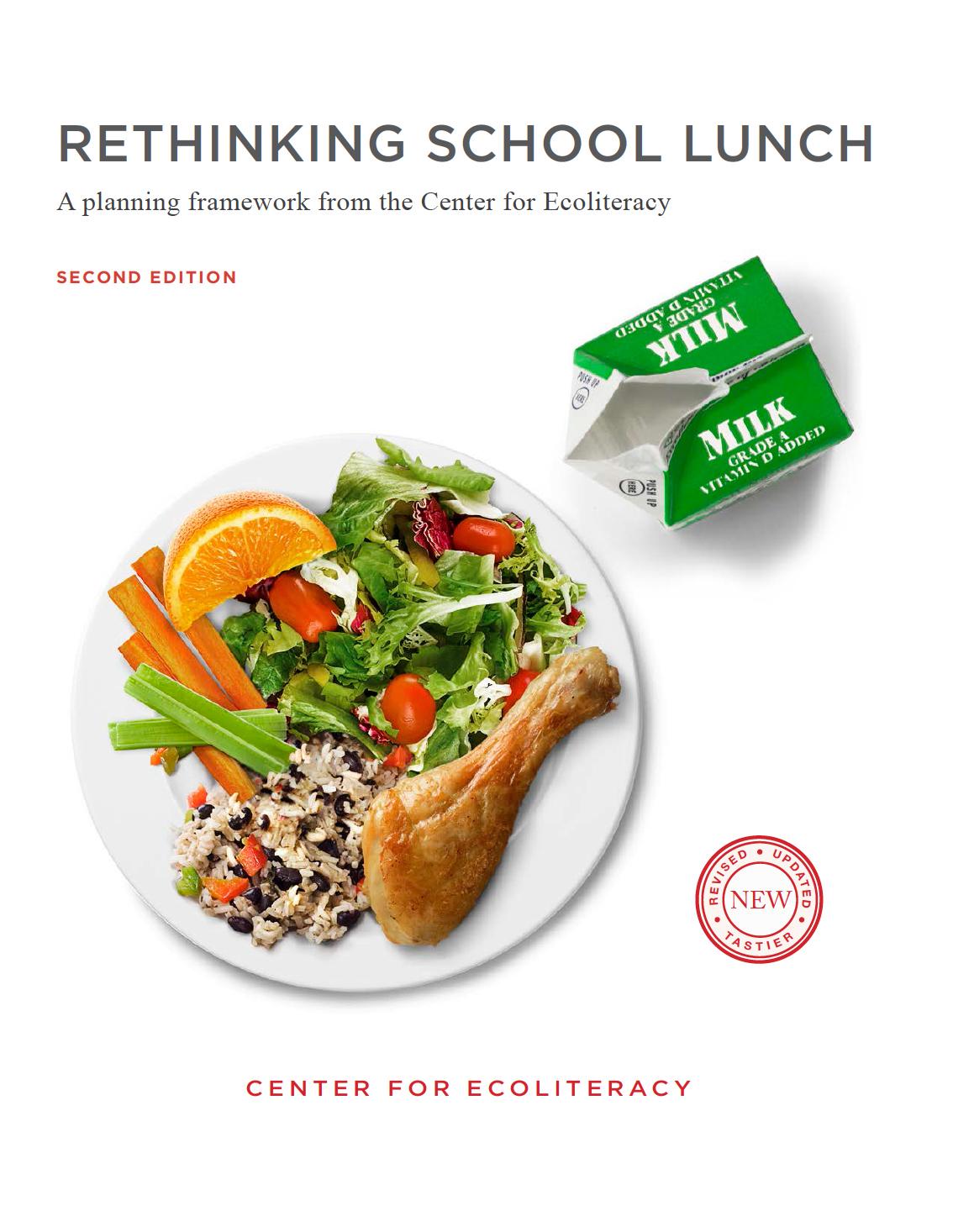
The RSL guide provides a planning framework that contains tools and creative solutions to the challenges of improving school lunch programs, academic performance, ecological knowledge, and the well-being of our children. In its chapters, accessible below, experts and practitioners highlight goals and challenges, showcase success stories, and offer resources for further exploration.
Download Entire RSL Guide
The complete set of Rethinking of School Lunch chapters, plus LiFE (Linking Food and the Environment) lessons, the RSL Financial Calculator, and a farm-to-school guide.
> download the complete set (11.8 MB zip)
Chapters included in the Guide
Road Map
What would a successful school lunch program contain? How could a school district develop and implement a plan that satisfies the needs of its stakeholders? The road map provides an introduction to the guide, the vision, an implementation strategy, and recommendations for approaching the following chapters from the perspectives of district administrators, food service directors, educators, or parents.
What's Inside?
- Vision and Implementation: A list of key goals and approach to the business planning process for school districts.
- It's Time to Implement a Farm-to-School Program: Marilyn Briggs, former director of the Nutrition Services Division and retired Assistant Superintendent of Public Instruction for the California Department of Education, outlines a farm-to-school lunch program, and shares her experiences on how it can be accomplished.
Food Policy
A school district food policy that spells out the challenges and provides solutions signals the entire community that the district is committed to improving student health. Developing a food policy is a practical way to create a shared vision and language about needed change. This section sheds light on what it means to undertake a food policy development process driven by the shared leadership of school administrators, educators, school food service directors, and parent groups.
What's Inside?
- Thoughts on Implementing a Food Policy: An interview with Zenobia Barlow, executive director and a cofounder of the Center for Ecoliteracy.
- Model School District Food Policy: The Berkeley (California) Unified School District's Nutrition Education and Physical Activity Policy.
Curriculum Integration
The learning mind is constantly searching for patterns and connections, yet academic instruction is traditionally separated into disciplines. Using a theme to connect disciplines makes the curriculum more coherent and helps students see relationships. With the local food system as a theme, for example, lessons in nutrition become part of a science curriculum that is integrated with visits to local family farms, work in the school garden, and the practice of harvesting food and preparing it for lunch. This section takes a look at the pathways and possibilities.
What's Inside?
- Interview with Michele Lawrence, Superintendent of the Berkeley (California) Unified School District: A look at how one district is working to make the food system and health a learning experience for students.
- Curriculum Integration Resources: Getting started with curriculum integration means becoming familiar with a range of topics, including brain-based learning, multiple intelligences, and much more. Explore this world through these resources.
- Linking Food and the Environment (LiFE) Curriculum Series, Teachers College
- Columbia University. LiFE was developed by the Nutrition and Science Education Program with a Science Education Partnership Award (SEPA) and is available from the National Gardening Association.
Food and Health
Today, despite adequate food supplies, an alarming number of youth in the United States are poorly nourished or undernourished, and school-age children face an escalation of diet-related illness. Good nutrition has a vital role in promoting childhood growth, health, and learning, and in reducing the risk for chronic diseases of adulthood. A school environment that supports healthful food choices, serves student health and well-being, and has far-reaching effects on the school community and the community at large.
What's Inside?
- Case Study: Nancy May, food service supervisor for the Healdsburg (California) Unified School District, discusses her experiences implementing a farm-to-school lunch program.
- A Seasonal Lunch Menu: These model school lunch menus, based on local seasonal availability, show one school's creative approach.
Finances
Perhaps the single most often-asked question regarding the shift in food service from prepackaged, "thaw-and-serve" meals to meals prepared from fresh, locally grown food is, "Is it financially viable?" The answer is yes — but it takes careful planning and a shift in perspective. This section addresses issues of real costs and hidden values.
What's Inside?
- Interview with J. P. Dozier, director of finance, and Marc Zammit, director of culinary support and development, at Bon Appétit Management Company: Straight talk on costs from people who know.
- A financial calculator that can be used for district-wide food services. Start crunching the numbers. These downloadable interactive Excel spreadsheets can help districts budget and plan costs. The zip file contains sample and template Excel spreadsheets.
Facilities Design
Changing the way food is served in schools goes much deeper than simply removing Coke machines from the hall and packaged, processed food from trays. The idea of redesigning facilities is challenging and exciting. Districts facing budget constraints will need to look for creative ways to assess their needs and find financing. This section offers good reasons for change and practical considerations.
What's Inside?
- Answers to Basic Questions: The Center's interview with Steve Marshall president of The Marshall Associates, Inc., a food service consulting and design firm.
- Architectural Charts, Diagrams, Equipment Lists, and Cost Estimates: Charts and diagrams illustrate generic solutions to design problems. Equipment lists and cost estimates for central kitchens and satellite serving sites provide useful planning information.
The Dining Experience
Students are highly influenced by the environment in which the school meal is served. In fact, they often make decisions to eat or not to eat at school based on their experience of the dining room. That's reason enough to try to make this experience a good one. This section discusses the many social, health, and learning benefits of a student-friendly dining experience and offers practical tips.
What's Inside?
- The Importance of the Dining Environment: An interview with Alice Waters, owner of Chez Panisse Restaurant and founder of The Edible Schoolyard.
- The Edible Schoolyard Project: An interview with Marsha Guerrero, program coordinator of The Edible Schoolyard, a successful one-acre organic garden and kitchen classroom project serving middle-school students.
- Student Dining Evaluation Form : How do students really feel about their dining experience at school? This questionnaire, developed by Dr. J. Michael Murphy of Harvard School of Medicine with the Center for Ecoliteracy, is a tool for evaluating the present and planning future changes.
Professional Development
Successfully integrating nutrition education into the school curriculum, using the local food system as a context for learning, and preparing meals on site from fresh ingredients calls for professional development. Making sure that teachers have mastered the content and strategies, and food service staff have learned any new skills and approaches they may need, can be a challenge. This section offers some ideas to think about and explore.
What's Inside?
- Round Table on Professional Development: Marilyn Briggs [former director of the Nutrition Services Division and assistant superintendent for the California Department of Education], Nancy May [food service supervisor for the Healdsburg (California) Unified School District], Marc Zammit [director of culinary support and development at Bon Appétit Management Company], and Zenobia Barlow [executive director and a cofounder of the Center for Ecoliteracy] discuss professional development needs.
- Farm to School Guide: An Introduction for Food Service Professionals, Food Educators, Parents, and Community Leaders, developed by Alison Harmon at Pennsylvania State University for the National Farm to School Program
Procurement
Replacing prepackaged meals with fresh, locally grown, seasonably available foods from smaller family farmers is a challenge for procurement. An important part of this transition is locating and establishing relationships with local farmers. Building these bridges will take thought, time, and dedication. But, as a number of school districts nationally and internationally have learned, it can be done successfully. This section offers suggestions for how to think about procurement.
What's Inside?
- Five Successful Models of Procurement: It's already happening. Janet Brown, program officer for food systems, Center for Ecoliteracy, discusses five procurement systems developed and used by school districts.
Waste Management
Schools — especially as a by-product of food service — generate a great deal of waste. The challenge to schools is to go beyond teaching children to put empty cans and bottles in separate containers, and to make waste management a viable and even exciting part of the total learning experience. This section discusses the why's of waste management, and some how's, including a look at composting with worms.
What's Inside?
- Education, Natural Resources, and Sustainability: Janet Brown, program officer for food systems, Center for Ecoliteracy, answers questions about school site waste management programs.
- Case Study: Vermicomposting — using worms for composting — provides a way for waste management and reduction to become part of the academic curriculum.
- Model School District Waste Management Policy: Current policy of the Berkeley (California) Unified School District.
Marketing and Communications
The support of parents, students, and other stakeholders can be crucial in ensuring the success of a farm-to school meal program. Getting the message across about good food, health, and nutrition is often a matter being heard through the noise of commercials and junk food packaging. This section offers some ideas for helping to "sell" the new food policy to parents and students.
What's Inside?
- Interview with Communications Consultant Andy Goodman: Valuable insights into communicating improvements to students and parents.
About Rethinking School Lunch
This section addresses the origins and motivation for the creation of this guide, defines the systemic problem-solving approach implied by "rethinking," and acknowledges the partners and collaborators who have inspired and contributed to Rethinking School Lunch.