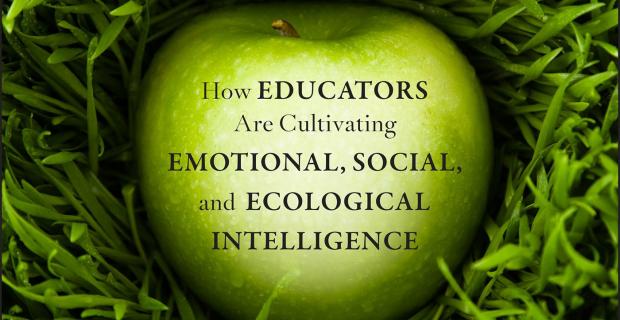
Smart by Nature: Schooling for Sustainability

By Michael K. Stone/Center for Ecoliteracy
Foreword by Daniel Goleman, author of Ecological Intelligence
Published by Watershed Media
Smart by Nature: Schooling for Sustainability portrays the growing sustainability movement in K-12 education, showcasing inspiring stories of public, independent, and charter schools across the country.
This 216-page book describes strategies for greening the campus and the curriculum, conducting environmental audits, rethinking school food, and transforming schools into models of sustainable community.

Purchase Smart by Nature
Available at:
Amazon
Barnes & Noble
Acorn Naturalists
Winner of the 2010 Green Prize for Sustainable Literature
PRAISE FOR SMART BY NATURE
"Schooling for sustainability, as described in Smart by Nature, has never been more important."
– Daniel Goleman, author of Ecological Intelligence (Broadway Books, 2009)
"Smart by Nature is an inspired handbook that connects hands-on experiences of the garden, the kitchen, the table, the compost heap, and the classroom curriculum!"
– Alice Waters, founder of Chez Panisse
"As we recognize the sobering implications of global environmental and social justice threats, people are looking for smart new answers. Smart by Nature: Schooling for Sustainability offers the best hope of all by explaining what sustainable living really means, how to teach it, and why young people with this knowledge will lead us to a safer, more fair, and prosperous future."
– Kevin Coyle, Vice President of Education and Training, National Wildlife Federation
"Smart by Nature is must reading for teachers, school administrators, parents, and the concerned public. It is an encyclopedia of good ideas, principles, and case studies of some of the most exciting developments in education. It is an antidote to the idea that schools are failing and must fail. To the contrary, Michael K. Stone and the Center for Ecoliteracy show how schools succeed by joining curriculum and nature in innovative and practical ways. The results include smarter, more grounded children and lots more."
– David W. Orr, author of Down to the Wire: Confronting Climate Collapse (Oxford University Press, 2009)
"Smart by Nature is an inspiring and refreshing antidote to the hopelessness many feel in the face of the ecological challenges before us. This new book by Michael K. Stone and the Center for Ecoliteracy provides us with a great sense of hope—hope brought forth by schools throughout North America that have recognized that teaching young people how to grow food, or cook, or make something real with their hands is as important to the future of our world as is teaching math or English or the sciences."
– Michael Ableman, farmer, author, and founder of the Center for Urban Agriculture at Fairview Gardens
"Michael K. Stone issues a clarion call to educators and other community leaders to join the movement to prepare students to meet the environmental challenges of the future.... For facilitators, this book provides numerous strategies for developing interdisciplinary lessons designed to help students understand that they are an integral part of nature and the interconnectedness of all living systems. This is a must for educators interested in schooling for sustainability."
- National Science Teachers Association, NSTA Recommends