

Using Your Cafeteria Fund to Support Farm to School

Farm to school and nutrition education are integral parts of school nutrition programs, and research shows that farm to school programs increase students' willingness to try—and eat—new foods, particularly fruits and vegetables. School meal participation increases by an average of 9% in schools with farm to school programs. This generates additional revenue from meal reimbursements that can be reinvested into food and school nutrition professionals, creating a virtuous cycle that improves school nutrition programs.
This guide creates a templated approach for California school districts to use Cafeteria Funds to increase their staff capacity for farm to school and nutrition education. This guide has been reviewed by both the California Department of Education (CDE) and the California Department of Food and Agriculture (CDFA). It includes case studies from four California school districts that have successfully used their Cafeteria Funds to hire staff and support thriving farm to school programs.
A Sustainable Approach
Finding stable, reliable funding for farm to school and nutrition education positions is a constant challenge. Funding is often dependent on one-time funds (e.g., the new 2026 Kitchen Infrastructure and Training Funds allow for hands-on food education, including farm to school coordinator positions). Farm to school programs have also recently lost federal funding for school garden staff, with the sharp decline in FoodCorps educators (only eight positions remain at two California school districts) and the complete defunding of Supplemental Nutrition Assistance Program-Education (SNAP-Ed). Funding farm to school and nutrition education positions through the Cafeteria Fund (also known as “Fund 13,” “the Cafe Fund,” or the “Nonprofit Food Service Account”) is an often overlooked funding source that can be renewed with annual approvals from CDE.
Farm to school and nutrition education are an allowable use of Cafeteria Funds under the United States Department of Agriculture (USDA) guidelines (SP 07-2015), provided certain conditions are met, including that all Cafeteria Funds must be used solely for the operation or improvement of the school food service program. Please note that nutrition education paid for with Cafeteria Funds must be an enhancement to standard curriculum and in collaboration with teachers; it cannot supplant the work of certified teachers. Staff positions strictly supporting horticulture classes, Future Farmers of America clubs, or other school associations are not allowable. CDE developed a management bulletin with more details, “Assessing Proposed Nutrition Education Costs,” and an online form, “Form ID SNP 63, Nutrition Education Expenditure Request,” which is available in the Child Nutrition Information and Payment System (CNIPS), and described below.
Success Stories from California School Districts
This resource is based on the work of visionary school nutrition leaders at four school districts: Oxnard Union High School District, Paso Robles Joint Unified School District, Rio School District, and Santa Ana Unified School District. These four school districts have used Cafeteria Funds to institutionalize farm to school positions as part of their school nutrition programs.
Oxnard Union High School District
Oxnard Union High School District hired four positions with Cafeteria Funds: a Farm to School Program Coordinator, Farm to School Nutrition Specialist, Farm to School Garden Specialist, and Farm to School Garden Aide. The Program Coordinator oversees the other three positions; fosters relationships with local farmers, community partners, and organizations offering grants; and schedules farm to school events with classroom teachers and administrators. All farm to school events help students learn about the value of food and their access to foods in the cafeteria, increasing student participation in school meals. The Garden Specialist and Nutrition Specialist implement lessons (as presentations or collaborations with credentialed teachers) that give high school students hands-on experiences connecting them to the cafeteria, including cooking classes, taste-testing demonstrations, and community cooking events. The Farm to School Garden Aides support the maintenance of the school gardens as well as garden and cafeteria events.
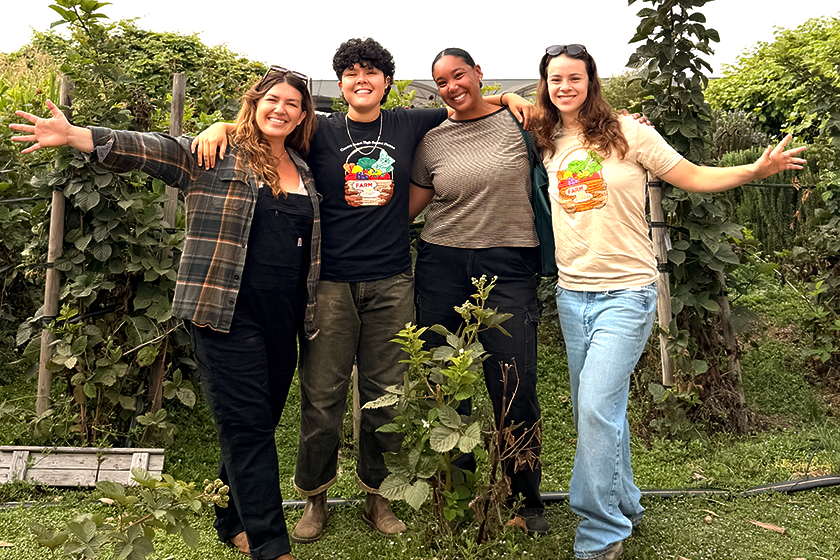
The Farm to School Team at Oxnard Union High School District. Photo Credit: Oxnard Union High School District
Paso Robles Joint Unified School District
Paso Robles Joint Unified School District hired a farm to school coordinator with Cafeteria Funds. The coordinator plays a vital role in connecting students with local agriculture, promoting healthy eating habits, and enhancing the district's food system. This position involves developing, implementing, and managing farm to school initiatives across the school district, including TK–12 and after-school programs. They work collaboratively with the Food Service and Child Nutrition Department, school administration, teachers, students, community partners, and local producers.
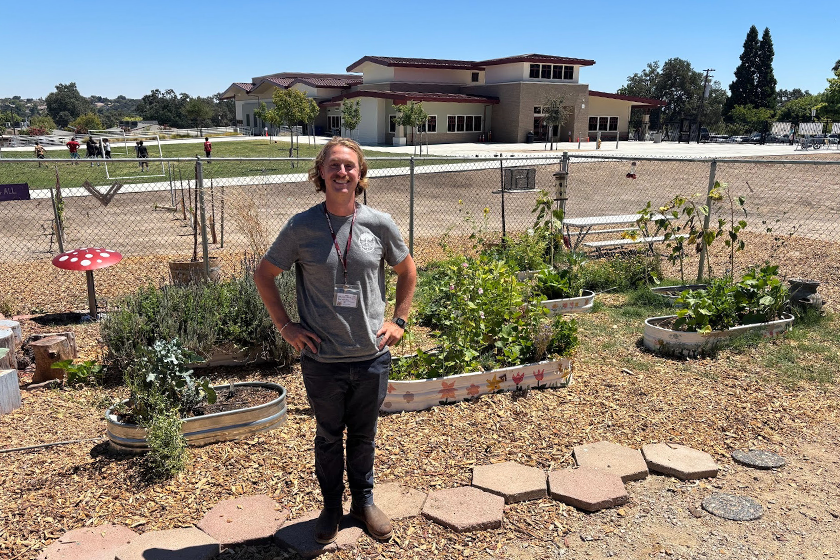
Max MacLaury, Farm to School Coordinator for Paso Robles Joint Unified School District. Photo Credit: Paso Robles Joint Unified School District
Rio School District
With Cafeteria Funds, Rio School District funded the following positions to implement a district-wide farm to school program that fosters strong connections between the classroom, cafeteria, school garden, and farm for students and the community, building lifelong healthy habits and a deeper understanding of the food system:
- Nutrition and Farm to School Coordinator (one permanent district management position), who oversees the farm to school educational program across nine schools.
- Farm to School Operations Manager (one independent contractor), who manages 10 acres of fruit and vegetable production at the school district’s regenerative farm. All produce grown on the district farm is incorporated into school meals.
- Nutrition and Farm to School Specialists (five permanent district union positions) implement integrated, hands-on food, garden, and farm-based learning experiences that connect students with fresh, locally-grown foods in cafeterias, school gardens, and the farm.
Rio School District submits annual approvals to use Cafeteria Funds for the permanent district positions. Before creating these positions, Rio School District partnered with FoodCorps for six years to implement garden and food education and received two rounds of the CDFA Farm to School Incubator Grant to support the program.
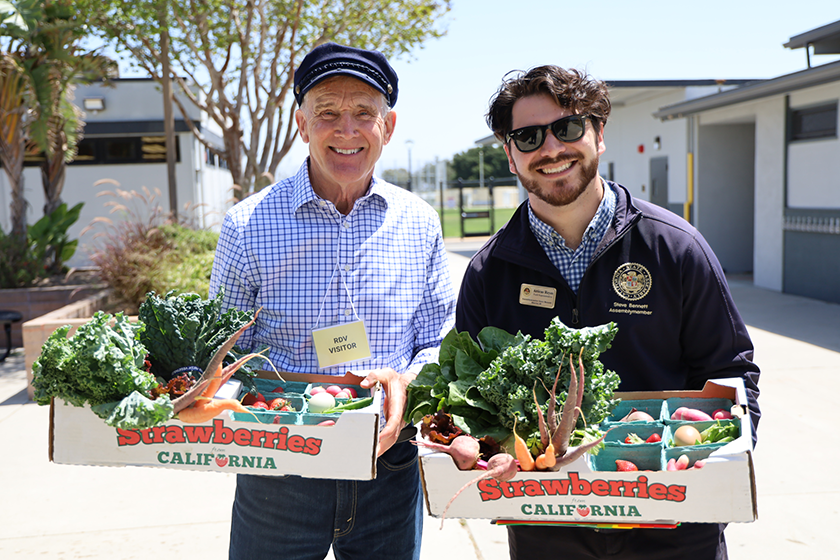
California Assembly Member Steve Bennett and staffer Atticus Reyes tour the Rio School District farm. They each hold abundant boxes of produce harvested from the farm, including fruits, vegetables, and a chicken egg. Photo Credit: Carlo Godoy, Media Coordinator, Rio School District
Santa Ana Unified School District
Santa Ana Unified School District hired a Coordinator of Farm to School Programs with Cafeteria Funds. The role coordinates all District farm to school programs, including sourcing, farmer outreach and support, and educational programming in school gardens. The Coordinator implements programs that support the district in providing fresh, locally sourced foods in school meal programs.
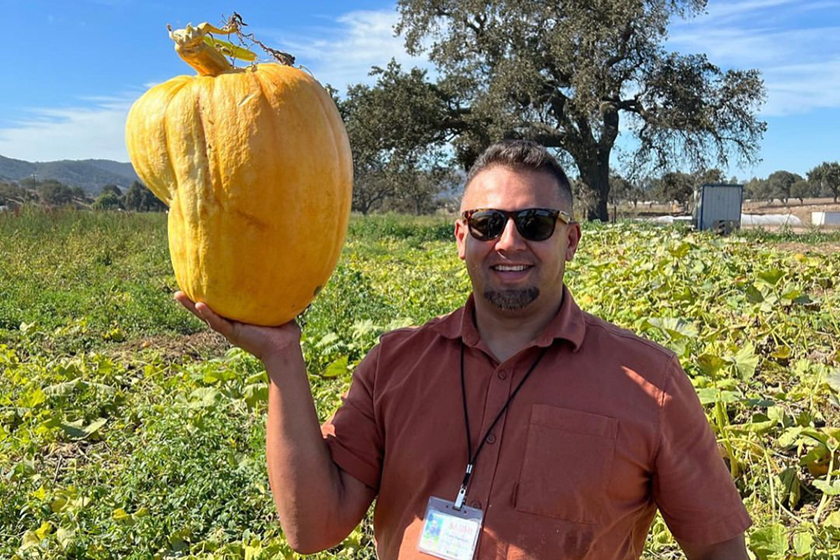
Moises Plascencia, Coordinator, Farm to School Programs, at Santa Ana Unified School District. Photo Credit: Josh Goddard, Director of Nutrition Services, Santa Ana Unified School District
Thank You to Our Partners
This resource was inspired by the innovative team at Rio School District. We are grateful to the school nutrition leaders who contributed photos and case studies, including Alise Echele and Lacey Piper of Rio School District; Alyssa Burgers of Oxnard Union High School District; Jessie Wesch of Paso Robles Joint Unified School District; and Josh Goddard and Moises Plascencia of Santa Ana Unified School District. Thank you to the CDE staff, including Kim Frinzell, Jackie Richardson, Stephanie Russell, and Katie Tully, for their thoughtful reviews. This resource was produced in partnership with the CDFA Office of Farm to Fork, with contributions from Nick Anicich and Jackie Day.
Let us know what you think! If you use this resource and have feedback to share, we’d love to hear from you. Please email info@ecoliteracy.org.